The Poor In Spirit

St. Matthew gave us all the Beatitudes on Sunday morning, but the Bishop focused on only one at Mass: the first one. He called it the doorway to all the others, the requirement for the rest. Live the first one, the others become easier to understand and emulate.

It reminded me of my friend, Macrina Wiederkehr, a Benedictine nun who died in 2020 of a brain tumor. She has a reflection on all the Beatitudes, but this one danced around in my head as the Bishop spoke.

I turned to the empty ones,
What does it mean to be poor in spirit? I asked
Is there anything good about being that poor?
 
The poor in spirit replied:
Can God fill anyone who is full?
And how sad if you should suddenly discover
That you are full of illusions
Instead of filled with truth.
 
Being poor in spirit means
Having nothing to call your own
Except your poverty
It is a joyful awareness of your emptiness
It is the soil of opportunity
For God has space to work
In emptiness that is owned.
 
Being poor in spirit means
Knowing that you are so small
And dependent
Needy and powerless
That you live with open hands
And an open heart
Waiting to be blessed.
For only then can you be blessed
If you know
That you need blessing.
 
Being poor in spirit
Means that you have time
You are not oppressed by deadlines
There is always time for waiting
For the one who is poor.
Being poor in this way
Frees you from the prison
Of having to have everything
planned and structured
As though there were no tomorrow.
 
And finally, being poor in spirit
Means being able to say
Without embarrassment
Humbly, and yet with passion:
“I need you.”

This week, may we have the courage to be empty, to be poor, to seek the assistance of others as we journey together.

Words to Live By

Politics is in the news these days and whether you live in a red or blue state, vote right or left and somewhere in the middle, it is hard to avoid the noise coming out of the nation’s capital.

When I was in the Holy Land, the Dominican who guided us said something that has been on my mind these last few days. As we visited the Mount of Beatitudes, he asked the group if we could recite any words to the US Constitution. A few knew how it started, “We the People of the United States, in order to form a more perfect Union, establish justice, insure domestic tranquility, provide for the common defense….” Then the voices trailed off.

Though no one could say much more, we knew the gist of it and could certainly explain what the Constitution did, its place in history, and why it was still important.

But that Father Paul threw us a curve. How many could recite the Beatitudes? We had just read Matthew 5:3-12 and yet few of us could remember more than a few of the eight in the list.

“We remember what guides a country, but not what guides our faith,” Father Paul challenged. He likened the Beatitudes to our own constitution. That got me thinking. By definition, a constitution is “a body of fundamental principles or established precedents,” so doesn’t it stand to reason that the Beatitudes are just that – fundamental principles of our Catholic faith?

Take some time this week and read Matthew, chapter five. See how many you can commit to memory (I’m up to six). Think about what each teaches. Imagine what it must have been like to be challenged by those words two thousand years ago.

As the good bishop, Fulton Sheen, once said, “If you do not live what you believe, you will end up believing what you live.” Maybe living what we believe begins with knowing what we believe.

Now there’s a lesson our politicians could certainly use.

~pjd


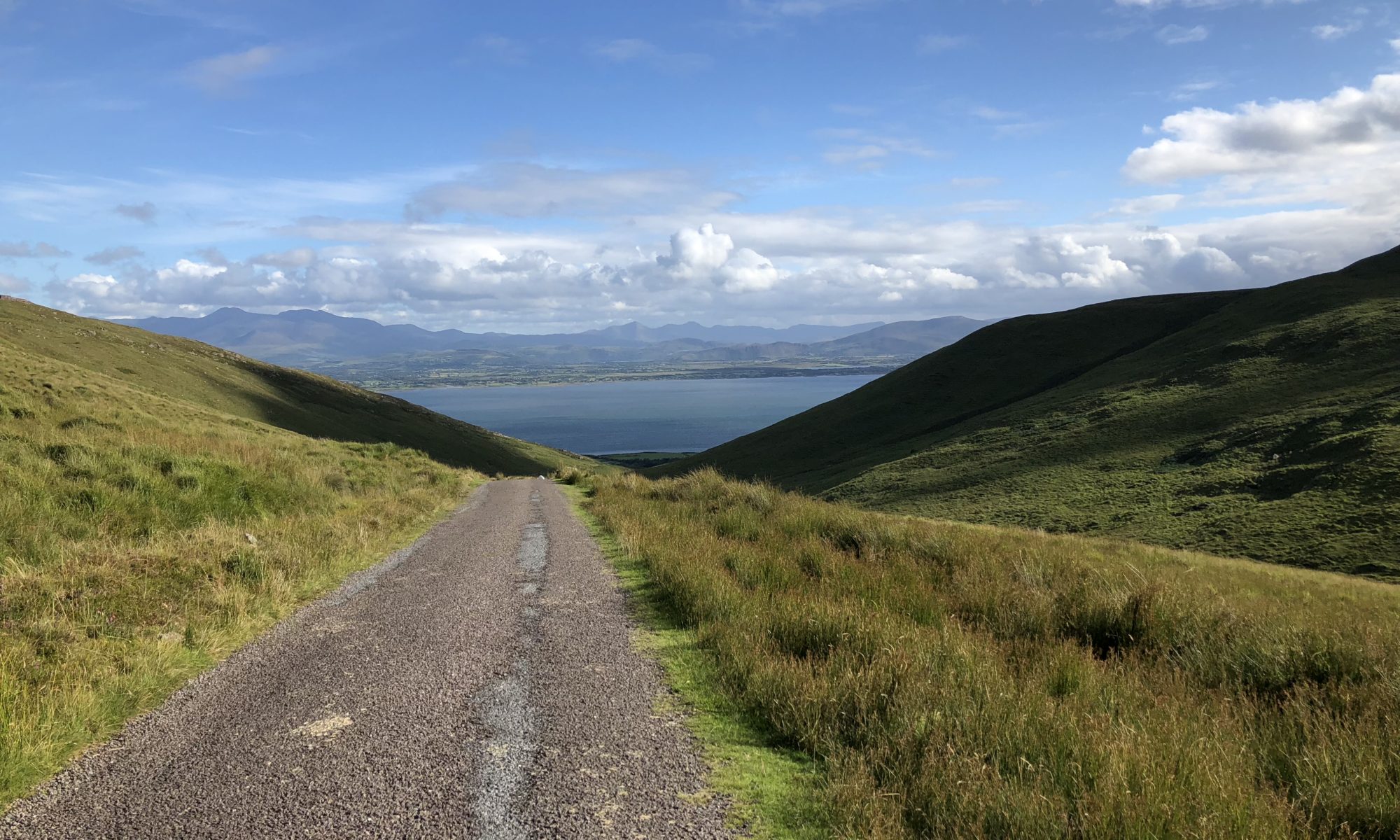
(photo taken looking from the Church of the Beatitudes down the mountain)