More Than A Day Off

School and work are closed today as we commemorate the birth of Martin Luther King, Jr. The free time offers us an opportunity to catch up on sleep, watch a movie, or complete projects at home that have been waiting. But we would miss the real purpose of the day off if we did not also take a moment to remember the message of Dr. King. 

As a white American, I have never been racially profiled. My ancestors were never sold into slavery. No one has ever used a racial epithet to describe me or my children. The lenses through which African Americans see the world are not lenses through which I can see. In many ways, our stories are different and today is a chance to remember that. 

Dr. King’s “I Have a Dream” speech is by far his most quoted work. Until last year, it was the work with which I was most familiar. When I started teaching as an adjunct at a local university, I assigned Dr. King’s “Letter from the Birmingham Jail” to the students. It was in the book and appeared on the syllabus I inherited. 

You should read it. Everyone should read it. 

It was written after Dr. King was arrested for his leadership of boycotts in Birmingham and in response to white church leaders who were criticizing King’s methods and presence in their community. The other church leaders had published an editorial, calling him an outsider and listing several criticism of his work and his movement. 

You can hear Dr. King’s frustration and despair as he writes on napkins, newspapers, and anything he can get his hands on, trying to scrape together a response to a world that does not understand nonviolence or the plight of his brothers and sisters. 

Perhaps today we can take a few moments and read the letter in its entirety. The words he wrote then are still appropriate today. 

“Injustice anywhere is a threat to justice everywhere. We are caught in an inescapable network of mutuality, tied in a single garment of destiny. Whatever affects one directly, affects all indirectly.”

You have, no doubt, heard the first part of that quote before. But what about the rest of the paragraph? Do we behave as though the lives of others affect my life? Do we believe in King’s “single garment of destiny”? Am I really affected by what affects another? Or do I watch a 30-second clip of a video on the news or online, instantly form an opinion, and let that opinion shape my reality?

“We will have to repent in this generation not merely for the hateful words and actions of the bad people but for the appalling silence of the good people.”

We are still repenting for the sins of our past – as a society and as a community of faith. Surely part of the healing must include a commitment to be silent no longer when we hear hateful words and actions of bad people. 

“Shallow understanding from people of goodwill is more frustrating than absolute misunderstanding from people of ill will. Lukewarm acceptance is much more bewildering than outright rejection.”

How in the world are we silent in the face of hunger, poverty, racism, sexism, and outright ignorance? Why are we quiet when someone from another political party or faith or race is treated with such disdain? When did our winning have to include the humiliating defeat of the opponent? Where are the real leaders today?

And finally:

“Will we be extremists for hate or will we be extremists for love? Will we be extremists for the preservation of injustice ― or will we be extremists for the cause of justice?”

It is time for people who say they believe in Jesus and all He teaches – love of neighbor, forgiveness of others, charity, hope, and peace – to show the world that hatred has no home hear, authority is never abused, everyone is welcome, and salvation is open to all. 

Spend some time studying Dr. King today. Discover his message of peace. Welcome the stranger. Forgive someone. Most of all, live a life of peace and justice so that others might look at us and see straight through to God.

May your week be blessed.

Lighting Our Lamps

This morning’s Gospel gives us Luke’s version of one of my favorite passages in Matthew.

Jesus said to the crowd:
“No one who lights a lamp conceals it with a vessel
or sets it under a bed;
rather, he places it on a lampstand
so that those who enter may see the light.
For there is nothing hidden that will not become visible,
and nothing secret that will not be known and come to light.
Take care, then, how you hear.
To anyone who has, more will be given,
and from the one who has not,
even what he seems to have will be taken away.”

 In this parable of the lamp, we are given very clear instructions: those who have heard the Word of God are to show it to others – in word and in action.

Even when we are surrounded by darkness (perhaps especially when we are surrounded by darkness), we are to be a light for others.

This week, it might be worth asking: when people look at our lives, can they see light? Does that light direct them towards God or towards ourselves? Do we let the darkness overwhelm us? Consume us? Paralyze us?

This week, I will work on being a light. I will work on reflecting the love of God to others so that they may see the good things I do and thank God for my presence in their lives.

Will you?


Who We Obey Makes A Difference

From the archives (circa 2012)

On Sunday we heard, if we were really listening, great advice from the Acts of Apostles.

“We must obey God rather than man.”

Man tells us it’s okay to be mean if people deserve it or if it gets us ahead. God says, “ Love your neighbor.”

Man tells us it’s okay to execute in the name of government. God says, “Do not kill.”

Man tells us life begins whenever we say it begins and until then we can pretty much do what we want with that blob of cells. God says, “Before you were born, I called you by name.”

Man tells us that might makes right, power is everything, and the poor can take of themselves. God says, “The first shall be last,” and “As I have done, so you must do.”

Man tells us it’s okay to lie if it means we win the day, that the truth is flexible and its definition can change. God says, “I am the Way, the Truth, and the Life.”

Man hates. God loves.

Man is intolerant. God welcomes everyone.

Man breaks down others. God builds us up.

Man gets lost. God gives Light.

Man despairs. God sends Hope.

Man crucifies. God resurrects.

Who we obey is a very big deal.

~pjd

Jesus Everyday

All week long, we read in Mark’s Gospel accounts of Jesus traveling from city to city, town to town, changing people’s lives. He heals the sick, gives sight to the blind, speech to the mute, peace to those possessed, and hope to those who are ill.

Everywhere he travels, people are amazed. They are transfixed by his teachings and moved by his actions. Through this son of a carpenter, the people see the Kingdom of God revealed. Through Jesus, they can see the hope of what has been promised for generations.

As I read ahead to the week’s readings, it made me realize how many times the presence of God is revealed in my life each week. Through the prayers of children, the conversations around the dinner table, interactions with coworkers, and opportunities to share in the Eucharistic celebration, opportunities abound.

It also made me realize how many times I miss the obvious. As we head towards the season of Lent, my prayer will be that I slow down and pay attention; that I stop looking for excuses and start seeing Jesus.

We cannot give what we do not have. How can I possibly expect to bring Jesus to others if I fail to see him in the everyday?

~pjd

Death and Life are in the Power of the Tongue

I’m sorry…I didn’t mean it
I take it back
Strike it from the record

What is as irreversible as murder, violates its victims more than theft, is as deadly as an epidemic? And is a lot closer to you than you want to think?

Gossip, slander, and thoughtless speech. Gossip is a million-dollar industry in our country today. We tend to think of it as a sport, harmless and fun. After all, it’s only words. We even have shows devoted to it.

As Christians, we are called to see it differently. Which is worse, we must ask, to steal from someone or to speak ill of someone? To defraud a person or to humiliate him? Answer: Property can be restored, but the damage done to another can never be undone. In fact, our Jewish ancestors compared slander and humiliation with murder: the destruction is irreparable and enduring.

You can’t take it back. What we say about each other is terribly powerful: words have a long, long half-life, and they can destroy in unseen, unhealable ways.

Our words are a footprint we leave for the world. What will they reveal about the way we treat our children, our parents, our friends, students, co-workers, employees? How we treat ourselves?

It’s a new year. Perhaps none of us will find a cure for cancer, or feed the world’s hungry, or bring about world peace. But nearly every day we find ourselves with someone’s reputation or sense of worth in our hands.

We can improve our world in a powerful, pervasive way; we can act as though our words had the power of life and death.

They do.


About this reflection

When I was a child, there was an advertisement in the Wall Street Journal with the headline and text above, though I have edited some text. The ad was in celebration of the Jewish New Year, I believe. My mother, wise as she was, cut it out and posted it on the refrigerator. If you said or did something that warranted further reflection, you got to stand in front of the full page of newsprint. In time, I had it memorized. When her children moved out of the house, my mother made sure we each got a copy. Mine hangs on the refrigerator and I can still say it by heart. We learn slowly as children…and sometimes more slowly as adults. Happy New Year Mom. Happy New Year One and All.


Carrying Christ

One of the first graduate courses I took at Notre Dame was taught by the now-retired Bishop Robert Morneau of Green Bay, Wisconsin. It was called Faith in Fiction and we spent our time together studying writers like Flannery O’Connor and poets like the Carmelite nun, Jessica Powers. But one of the first poems the good Bishop used in class was about today’s Gospel readings. It was written by the late Ruth Mary Fox and offers a great challenge to each of us.

Into the hillside country Mary went

Carrying Christ.

And all along the road the Christ she carried

Generously bestowed his grace on those she met.

But she had not meant to tell she carried Christ

She was content to hide his love for her.

But about her glowed such joy that into stony hearts

Love flowed

And even to the unborn John, Christ’s love was sent.

Christ, in the sacrament of love each day, dwells in my soul

A little space.

And then as I walk life’s crowded highways

Jostling men who seldom think of God

To these, I pray, that I may carry Christ

For it may be

Some may not know of him

Except through me.

As we watch the news and see the violence, bigotry, and unbridled enthusiasm for ignorance and dishonesty on both sides of the proverbial aisle, we are challenge this week to ask ourselves this important question:

“How will we carry Christ this week?”


A Very Good Day


The first Father’s Day in our new home started with the family going to Mass together, breakfast at a local diner, and then for a short drive up the road – but it was Spirit led all the way.

The new issue of Time magazine arrived on Saturday and when child number three saw the list of names of those killed in Orlando, the questions started. “Why did they die?” (The same question is posed by the magazine itself.) “Who killed them?” “Why would he do that?” “Why do people shoot people?” “What’s a nightclub?”

All good questions, but I have to be honest that the last one made me laugh. These children have boring parents.

Sunday morning at Mass, Fr. John gave a stirring homily about the patience of God as we mere mortals take our time learning to love, honor, and respect each others. After all, it took centuries to unchain slavery from the modern world and longer still for women to even have the right to vote. His words reminded me that there are places in the world still learning such things and while we shake our heads in disgust at their inability to see things clearly, we continue to allow very bad people to do very bad things while we hide behind a document meant to protect freedoms, not facilitate murder.

But it was the homily and the reaction from the assembly (thunderous applause, a rarity for any Catholic church) that got the children talking again. The line was short at Chip’s Diner so we celebrated Father’s Day and continued the conversation over pancakes. Then, as we drove up highway 25, we told the children another story that they were bound to hear sooner or later.

We told them about Sandy Hook. We told them about Newtown. We told them about the wonderful woman I met who lost her daughter that morning. And we told them about the brave priest and parish staff and firefighters and police officers that took such great care of the families. Fifteen minutes later we were in front of the firehouse that appeared in the papers and on television for weeks after that fateful day in December 2012. The 26 stars that decorate the firehouse roof serve as a subtle reminder to the community.

Since any story of tragedy is made better with ice cream, we stopped at Holy Cow, a local ice cream walk up shop that sells a dish called Bishop Frank, our local ordinary (and my boss) and Father Bob, the local pastor whose actions at Sandy Hook and advocacy for gun safety are well noted.

On the way home, we sang. The children, as children do, absorbed what they could, asked what they needed to, and then recaptured the day with silliness, laughter, and song. It turns out when you substitute certain words about flatulence in songs about love, the songs get a lot funnier. I have never met Adele or Pharrell Williams, but my guess is they would have laughed too.

At home, we napped (okay, I napped), Mom and the girls swung in the hammock reading the Little House on the Prairie series, and, when I woke up, child number three and I demolished some ugly shelving in the basement that we have wanted to remove since moving in.

I don’t remember a day as packed with emotions as yesterday. I don’t remember a weekend where we got as much accomplished around the house. I don’t remember a conversation filled with so many questions. I don’t remember a car ride filled with so much laughter.

It was a good weekend. It was a good day.

It is good to be home.

Names

Their mothers and fathers gave them names. Hugged them. Fed them. Carried them. They sent them off to school, packed their lunches, corrected their homework, and signed their tests. Their brothers and sisters shared their rooms, inspired them, fought with them, borrowed their clothes, and protected them.

They had friends, co-workers, bosses, employees, partners, husbands, and wives. They drove cars, took buses, checked books out of the library, and rented movies.

They lived in Columbine, Ft. Hood, San Bernadino, Charleston, Sandy Hook, Orlando, and too many other cities to name.

So we will cry and wear ribbons, light candles and say prayers. We will remember them and care for those they leave behind. And these are good things. These are appropriate actions.

But will we learn anything?

Will we stop to talk about how this happens? Will we talk about guns? Will we talk about the bullets? Will we talk about the hate, the indifference, or the banality of it all?

We have to resist the urge to let the talking heads on television reduce it to allegiance to a foreign movement. We have to talk about it, even as we talk about the victims.

It’s not enough to say that love wins.

We have to act as though it really does.

And that requires action, conversation, and maybe even change.

The headlines will list the number of victims. Headlines always do.

But the numbers had names.

And they deserve more than headlines.

Getting Real

Moving got real over the weekend.

Packing up the house and finding another was exciting. Starting a new job was a welcomed joy. Picking out bedrooms and making new friends was an adventure. All the back and forth is tiring, but anytime you pack up and go away with kids, there are moments of fun and enthusiasm.

But Sunday things got real for all of us.

Our pastor called us forth at the end of Mass and asked the parishioners we have worshipped beside to join him in bestowing a blessing for departing parishioners. He was clear not to use the blessing for departed parishioners and I appreciated the distinction. As we stood there, child number two took my hand, child number one started to choke up. So did Maureen. So did I. There is something special about a place where you have been every weekend for years. A place where your children’s feet were washed and souls nourished. A place where you have bid farewell to friends and seen other begin their lives together. A place where dozens upon dozens of babies have been baptized and where, upon seeing it will happen, the faithful rejoice instead of grumble at the thought of Mass taking a little longer that morning.

We will miss the people we know only by where they sit. We will miss the parish staff and the deacons. We will miss the pastor, a treasured friend whose homilies were often peppered with quotes from people as varied as the parishioners themselves. Anyone who can work Annie Dillard, Oscar Wilde, and Thomas Merton into a homily and still tie it into the readings of the day is among the most well read of his brothers.

On Thursday, the children will repeat the scene at a school that will be even harder to leave. Saying goodbye to their friends will be tough, but in this day and age of Skype and instant messaging, those friendships will last. But saying goodbye to the teachers, especially the Oblate Sisters of St. Francis de Sales, will be nothing short of overwhelming. These incredible women of faith have welcomed our family into their home, recognized that parents are the first teachers in the ways of faith and should be partners in educating the young, and have lived every day as a model of love and joy and hopefulness. They ask the children to be their best selves, nothing more, nothing less. They challenge the children to live Jesus with great conviction because each day that is exactly what these sisters do. They are unequaled, unmatched, unbelievably generous, and our children will always be better for having been in their presence.

In a flash it will be over. The new school awaits. We have found a home at a new parish with great music and incredible preaching. We are excited about the new challenges and Maureen and I will be glad all the driving will cease (not to mention the $700+ in tolls since February). We will bring back movie night, which the children have missed since not being together. Pancake day will switch to Sundays so Maureen can begin a new tradition: walking with the women of “the circle” down the block to the diner for Saturday breakfast. Clean sheets are on the bed and the lego creations made with care and skill in their temporary living quarters, made it home safely last night.

Life begins again on Thursday. We will begin this new chapter as we end every school year: following the tradition started by my father. After a light dinner, we will enjoy all you can eat, make it yourself, ice cream sundaes. Life is good.

Hurry children. Hurry Maureen. Connecticut is waiting. The house is ready.

It’s time to come home.

Worth Reading

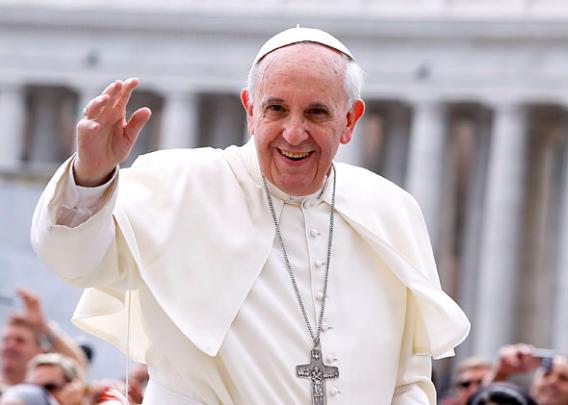
If you have not yet had a chance to read the latest exhortation by Pope Francis, I would encourage you to take the time to do so. If you fear it might be overwhelming, at least look online at the official summary.

Amoris Laetitia or The Joy of Love is essentially a love letter to the faithful. It is not, as so many hoped (and as the media would have liked), a change in church teaching. That really is not the Pope’s style. Rather, like he does with so many homilies, writing, and addresses, Pope Francis simply clarifies what the Church has always taught using language and analogies more relatable to today’s world.

The Pope is clear: the Church does not change because people want it to or the media expects it to. The Church is called to reflection but must always be grounded in the Gospel. The Church may be a love story, but it is not the kind of story where the majority gets to write the ending they would like to see.

I appreciate the way Pope Francis talks about family life, its struggles, challenges, and joys. He notes that in this age of idealism and individualism, it is hard for some people to give their lives over to another. Generosity of spirit takes work. Marriage takes work. Parenting takes work. But family is a vocation, a calling, and all families are challenged to live, as St. John Paul wrote, “the Church in miniature.” Families are “the domestic church” and are called to live in the home as we would before the altar. That is a tall order when the eight year old is screaming, the house is a mess, and company is on its way.

If you are married, reach chapter four together. It talks about love in marriage and is simply beautiful.

The Pope also writes about preparing couples for marriage (even hinting at dealing with bridezilla), and how we can educate our young more effectively, and how in this year of mercy, all are called to be merciful. Again, great reading.

For those of us in pastoral ministry, we are treated to a specific challenge: “At times we find it hard to make room for God’s unconditional love in our pastoral activity. We put so many conditions on mercy that we empty it of its concrete meaning and real significance. That is the worst way of watering down the Gospel” (AL 311). Like he did in Evangelii Gaudium, Pope Francis reminds those who work for the Church that ministry is never about me and never about you. It is about the Lord working through you and me.

In the end, the Pope reminds us “No family drops down from heaven perfectly formed” (AL 325). It takes work. It takes patience. It takes love.

In short, it takes Jesus.

Many of us have the day off of work. Put down the iPad, the rake, or the broom. Put away the mower and take a break from the mulch.

Then click here (or here) and read enjoy.