The Hat

There is a couple that sits in front of us at Mass on Sundays. She always wears the nicest hats. They are the quintessential older couple: smartly dressed, clearly still in love, and about the same age as our children’s grandparents. I would like to say that we would know them anyway were it not for the hats, but you never know.

A few Sundays after the family moved up here last summer, the oldest child wore a hat to Mass. It provided the perfect opening for Mrs. C to say something to our eldest about how good it is to see someone else who appreciates a good hat.

Since then the friendship has blossomed. Mrs. C has presented hats to the girls and going to Mass has become something I know they will enjoy because Mr. and Mrs. C will be there.

We have been to their home. They have baked us a cake. We pray for their daughter, who’s fighting an illness, every night. Mrs. C is one of our first-born’s “five” – that small group of people she knows she can count on, go to, trust, admire, and emulate. It’s more than just a hat now; they are part of our extended family.

As we sat behind them at Mass this morning, Mrs. C in her purple hat and Mr. C in his matching scarf, I thought about how, in a few short months, they had become a part of the village helping to raise our children. It made me think of the life of our parish community – filled with many such stories. A parish ought to be a family. Faith ought to be transformational. We discover that God loves us and values us only when we are loved and valued by others.

No matter where you sit on Sundays, relationships matter. Stories matter. Stories disarm us; shared responsibility disarms us. Faith is at the center of the table but we all share in the responsibility to make sure faith doesn’t just stay there. Our understanding of God grows only as we learn that God is beyond our understanding.

Sharing the Good News requires legs and arms and voices.

And, yes, on occasion, the right hat.

The “A” Word Disappears

Lent begins on Wednesday. In the Donovan household (and at liturgical celebrations everywhere), it has always meant the absence of the “A” word. When the children were younger, it seemed like a big deal. You could not sing “Alleluia” around the house – and when one child did, another would correct them (sometimes harshly). Yes, it seemed that “dummy” and “idiot” remained in the common vocabulary, but heaven forbid that anyone sing praise during Lent.

The children are getting older and I doubt there will be much discussion of the “A” word this year. I don’t know whether they have aged out of the novelty of it or if their focus is pulled in so many directions, they have just forgotten the big deal it used to be. This year, we need to make Lent a big deal again. We need to try harder to “live Lent” intentionally. Perhaps this will mean giving up ice cream or candy or making a concerted effort to read more, watch less, or spend more time outside. Perhaps the iPad or Wii will go unplugged and we will dust off the family Bible.

Family time has always been a sacred tradition in our home. Friday night movie nights are a long-standing commitment we enjoy. Sunday Mass is sacrosanct. But last year Lent was consumed with packing and moving and emptying a house we occupied for 11 years. Lent rushed by and we fell into Easter without realizing we had failed to live Lent well.

This year, we will slow down. We will pause. We will pray. We will sacrifice. We will make some new traditions in our new home and we will spend the next forty-plus days understanding why the Church asks us to live in the dessert for a bit.

Then, when Easter comes, we will sing that “A” word loud and long. We will rise up and celebrate the reality that death falls over into life. We will celebrate being Easter people.

But to make Easter a more powerful experience, we must first live Lent well.

Are you ready?

Unbelief

In today’s Gospel we see a man who hurts for his suffering child. “Help my unbelief,” he calls out to Jesus. I have been thinking about that line these past few days.

I can’t believe the things that pass for news. I can’t believe the people that pass for leaders. I can’t believe the same people who proclaim that life begins at conception also say that guns belong in schools.

I can’t believe that people really think the world is flat or that all undocumented workers are criminals, or that refugees arrive without years of vetting. I can’t believe Twitter is a thing.

I can’t believe how big my children are getting and how much fun they are when they play together. I can’t believe how often we say we are people of justice and mercy but behave quite differently. And yet, I can’t believe the recreational outrage to which so many people subscribe is quickly become the norm for our news and our politics and our communities. I can’t believe it’s almost Lent.

I can’t believe there are people who look at the wonder of creation and doubt the existence of God. I can’t believe that there are people who love God but don’t love their neighbor. And I can’t believe that there isn’t a scientist in this world who can’t come up with a rational reason that convinces us all that ice cream is, in fact, good for us.

As people of faith, there will always be things we struggle to believe. That God is love and that we, in turn, are called to share that love with others, shouldn’t be a struggle.

Help our unbelief, O Lord.

Family Dynamics

The first readings the liturgical calendar offers us this week have some serious family dynamics going on. Perhaps dysfunction is a better word. Cain kills Abel. Noah sails off with his family in a giant boat filled with animals. The families of Shinar, all speaking the same languages, build a city with a giant tower that concerns God so much he changes the one language to many, scattering the people to the corners of the earth.

And we thought our families had issues.

Families are a funny thing. You grow up with brothers and sisters who know everything about you: what makes you happy, what buttons to push to get a rise out of you, how to make you smile, or angry or sad or whatever. Families know how to avoid conflict or pit one sibling against another. They not only know your story, they had a hand in writing it. Families have our past and serve as a compass for our future. No matter how far we wander, families point us home.

I don’t connect with my original family nearly enough these days. There are some siblings I email or text or write to often and others I haven’t spoken to in months. The excuse I use is that my present family – the one I live with – are now my focus. But the fact is I could do more. I just don’t.

This week we will celebrate Valentine’s Day. The children will give cards to their classmates and the stores will discount the candy for those who forgot to plan ahead. It’s meant to be a day you show your loved ones that they are, in fact, loved. It seems odd to have a day set aside for that. Shouldn’t we be telling people we love them everyday?

Still, it’s a special day. So, Mom, Terri, Cathy, Tim, John, Cindy, Kris, Kevin, Meghan, and Timmy – consider this your Valentine. Tell your spouses and children too. They are loved; you are loved, and I am grateful we are a family. Dysfunctional though we may be (and we are), we belong to one another.

We are, as they say, our stories. And you will always be part of mine.

God Saw How Good It Was

It is a dad-only week as mom travels to Pittsburg for her organization’s annual meeting. I have caught up on laundry, mostly because Maureen did nearly all of it before she left. I have tried a new recipe for slow-cooker oatmeal, which the children voted “not as good” as the last recipe. And I let them have garbage for dinner one night while we watched the documentary, Planet Earth (and no, the irony of mankind’s treatment of the earth and the effect of dinner on their bodies wasn’t lost on the eldest).

It is only day three.

But there was moment in Mass yesterday when I was listening to Father John read about salt and light, that I began to think about how my children are lights in the world. The oldest is fascinated with the possibility of alternate universes and wants to study quantum physics. I’m not sure I could spell the word “quantum” at eleven.

Child number two wants to be a teacher. I have never met a child who could turn anything into “playing school.” If she helps her sister study, there is an imaginary classroom involved. If they are playing with Legos, she’s building a school. I’m not sure if she wants to impart wisdom or just likes being bossy.

Child number three will illustrate the next great graphic novel. He has taken a cue from his eldest sister and fills sketchbook after sketchbook with illustrations. When he isn’t drawing, he is casting spells from Harry Potter on all of us. I think he wishes the school would add Parseltongue to their foreign language choices.

Then there is the youngest. We are hoping the upcoming celebration of Reconciliation curbs her ability to lie to your face (“You were gone for thirty seconds and I’m not deaf, so there is no way in the world you brushed your teeth!”). Still, her gymnastic abilities are amazing. Her confidence is overwhelming. The lying will pass, I am sure, but I pray the playfulness never leaves here.

I look at these four amazing children and pray their father doesn’t screw things up. I pray that they will grow to cherish their relationships with each other. I pray that they will change the world in powerful, pervasive ways. I look from my chair to the four of them sitting on the couch, eating Chex mix and popcorn (we were out of ice cream) and I realize they are the light of the world. They are the light of my world.

And it is very good indeed.

Whatsoever You Do

“Give me your tired, your poor / Your huddled masses yearning to breathe free.”

These lines, taken by Emma Lazarus’ poem “The New Colossus,” have been in the news of late as politicians and pundits quote the lines in response to the president’s latest executive order.

But if you know your history, you know that The Statue of Liberty, which arrived in New York in 1885 and was officially unveiled in 1886, was not very popular at first. No one likes it when a gift ends up costing money. Lazarus is credited as being among the first to really understand the significance of Lady Liberty. Still, her poem did not become famous until years later. In 1901 a friend rediscovered her words and in 1903 the last lines of the poem were engraved on a plaque and placed on the pedestal of the Statue of Liberty. Lady Liberty does not hold those words in her hand, as some on Twitter would have you believe. Someone who was paying attention had to place them where they live today.

If you want to quote something that underscores the fecklessness of the executive order, go back to another text, written hundreds of years before.

“Amen, I say to you, what you did not do for one of these least ones, you did not do for me.” (Matthew 25:45).

I imagine that passage was not met with overwhelming popularity when it was first announced. Be nice to my enemy? Are you kidding? Open my door to the hungry, the homeless, the refugee? The ones who smell? Are you serious? They are so different than me. Welcome the stranger? But what if they hurt me? Shouldn’t I first test them to see what their intentions are, have them fill out paperwork, wait in line for years, and then help them? Wouldn’t that be safer?

I would imagine the best way to turn someone against you, to foster their supposed hate for you is to slam in the door in their face and tell them they are not welcome.

We have been preaching the Gospel of Matthew for a few thousand years.

The time has come to show our brothers and sisters in need whether we really believe what we preach. As the great Fulton Sheen reminded his pupils, “If you do not live what you believe, you will end up believing what you live.”

God is love. That is not an alternate fact. It is Truth. Those of us who say we believe in God should remember that.

The Things We Care About

When I was a teenager, I told my mother I went to see “The Color Purple” at the movies when I really went to see “The Breakfast Club.”

I do not really know why I wasn’t supposed to see “The Breakfast Club” and now, having seen both, it was really the tamer of the two, but those issues notwithstanding, I lied. I got caught, and I got punished.

I thought about that this weekend as the networks raged on about the size of the crowds at the Inauguration last Friday. Like a little boy who embellished the number of attendees at a party, the newly-minted leader of the free world seems to be bothered by very accurate reports that the crowds who attended his party were not as big as the crowds that attended parties in the past.

We even have new language, thanks to our new leader’s friends and advisors: “alternate facts.”

Yes, the press secretary lied. Yes, he presented “alternate facts.” But herein lies the problem. Alternate facts are not facts, they are just noise that gets in the way of a truth that, in this case, no one really cares about. In his must-read book, This Is How, Augusten Burroughs writes that “the truth is humbling, terrifying, and often exhilarating. It blows the doors off the hinges and fills the world with fresh air.”

He continues:

Truth is an unassailable fact. Not your opinion of the fact. Nor is the truth you report of the events from your own, uniquely distorted and biased view, where there could be a disco ball hanging in the way blocking the most important element.

One in five children in the U.S. live in poverty. One in five.

Four children are killed by abuse or neglect in the U.S. each day.

Seven children or teens are killed by guns each day in our great country.

The United Nations reports that a record 65 million people were forced to flee homes 2015. That’s one out of every 113 people in the world.

These are facts. Unassailable facts. True statements. I could go on.

The reality is this: the country is divided. People on the left do not trust the people on the right. People are the right are afraid of the people on the far right. To move forward, we have to find common ground, mutual trust, and at least pretend we are interested in conversations about what the other side wants.

Because while some are busy introducing “alternate facts” into the conversation, the homeless, the hungry, and the marginalized still stand on the periphery struggling to be heard.

These are the things worth talking about.

Movie Night

The launch of the Institute was a great success. This week I hope to get the video of Chris Padgett’s reflection online. It was raw, honest, and one of the best presentations I have heard on the many ways we encounter Christ in our family, our work, and our world. The evening was a wonderful celebration of a new adventure in the life of the Diocese of Bridgeport.

This weekend, a long weekend for parents and children, gave us a chance to put Christmas decorations away and unpack the few remaining boxes that have been shoved aside as our busy lives left little time for such things. It was like a second Christmas; opening a box and finding toys we haven’t missed and decorations we forgot we had. I finally found the other glove I have been missing – and with a Saturday’s snow of an inch of so – and more on the way, matching gloves were a welcome sight.

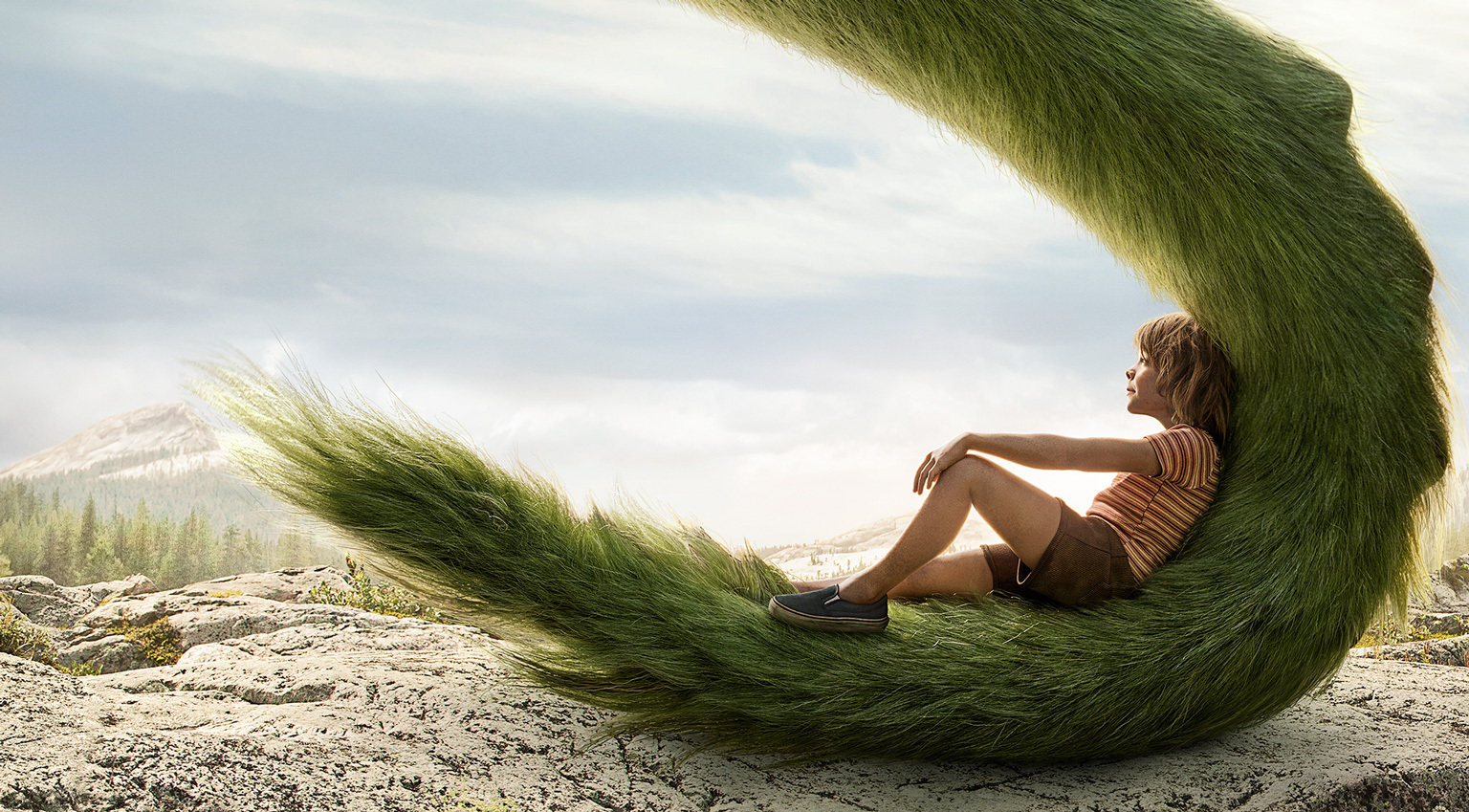
As many of your know, movie night is a staple here at the Donovan home. Someday I will finish my next book, “Movies I Want My Kids To See” (or at least that is what I call it in my head) and finally write down the movies we have watched together and those I recommend for a family movie night with children of varying ages. This past Friday found us watching Disney’s newest remake, this time retelling the story of Pete and his dragon, Elliott. We had watched the original Pete’s Dragon from 1977, which starred Helen Reddy, Mickey Rooney, and Jim Dale some time ago, and I was afraid of what the remake might do to the original story. I remember going to see the original at West Town Theater when I was seven and I have always loved that story.

The new movie was great and I wish we had bought it instead of rented it. The music had the children dancing to the credits and I was pleased to see even the oldest child, who stopped dancing somewhere along the way, join in the fun. In fact, I am not sure when the dancing after movies stopped in the last year, but it did. I was so happy to see it return.

School begins again tomorrow and the next break comes Presidents Day Weekend. Maureen flies out in the morning to Spokane and there are projects waiting at work. But if you get a chance, try the new Pete’s Dragon for movie night and listen carefully for the words of the song in the final credits.

If you’re lost out where the lights are blinding
Caught in all, the stars are hiding
That’s when something wild calls you home, home
If you face the fear that keeps you frozen
Chase the sky into the ocean
That’s when something wild calls you home, home

May your week be filled with dancing.


Liftoff

This Wednesday the Diocese of Bridgeport will give birth to The Leadership Institute. I get to be the midwife.

So much has changed in a year: new job, new house, new diocese, new parish, new friends, new challenges. It is a great blessing to be working in a diocese that values vision, direction, and creativity. Our leaders encourage people to look beyond the proverbial box and into what is possible for ministry, for the faithful, and for everything in between. We are coworkers in the Vineyard in every sense of the word.

My role as the founding director of the Institute means that I am the one who has been fortunate to bring the work that we have been able to do thus far to fruition. We are not as far as I would like, delayed by finding the right technology and making sure all the pieces of the puzzle fit. Still, it has been an amazing year (almost a year since I began) and the plans for what is next have me getting to work early and staying late. It is an exciting time to be a part of ministry here in Fairfield County.

On Wednesday night we will gather in prayer to launch the Institute. Shortly thereafter, learning modules will go online, workshops will be announced, and formation will commence. But first, we will reflect on Sirach 6, which encourages those who encounter the last half of the chapter to search for wisdom through patience, persistence, docility, and perseverance, knowing that we can search for wisdom all we want, but must remember that only God grants it.

We will also reflect on 1 Corinthians 15, one of my favorite Pauline passages. “…by the grace of God I am what I am, and his grace to me has not been ineffective…” Indeed, as I look back over all that has changed, all that endured before the changes happened, all those I left – eagerly and begrudgingly – all that I am and all that I have been – has made me who I am today.

Join me, please, in praying our official Institute prayer in thanksgiving for who we are as children of God, and for the great success of all the Institute hopes to accomplish.

God of Wisdom and Love,
You have called us to be missionary disciples of your Son,
and to use our gifts to build up His Body, the Church.
Empower us to follow the example of the twelve apostles
and to spread the Good News to the ends of the earth.

May we Encounter You in all our studies,
May our Formation be guided by Your Holy Spirit,
And may the Discipleship in which we share transform us
So that our ministry may renew the world
One person at a time.
We ask this through Christ our Lord.
Amen.


To learn more about the Institute, please visit www.formationreimagined.org

Death And Life Are In The Power Of The Tongue

I’m sorry…I didn’t mean it

I take it back

Strike it from the record

What is as irreversible as murder, violates its victims more than theft, is as deadly as an epidemic? And is a lot closer to you than you want to think?

Gossip, slander, and thoughtless speech. Gossip is a million-dollar industry in our country today. We tend to think of it as a sport, harmless and fun. After all, it’s only words.

As Christians, we are called to see it differently. Which is worse, we must ask, to steal from someone or to speak ill of someone? To defraud a person or to humiliate him? Answer: Property can be restored, but the damage done to another can never be undone. In fact, our Jewish ancestors compared slander and humiliation with murder: the destruction is irreparable and enduring.

You can’t take it back. What we say about each other is terribly powerful: words have a long, long half-life, and they can destroy in unseen, unhealable ways.

Our words are a footprint we leave for the world. What will they reveal about the way we treat our children, our parents, our friends, students, co-workers, employees? How we treat ourselves?

It’s a new year. Perhaps none of us will find a cure for cancer, or feed the world’s hungry, or bring about world peace. But nearly every day we find ourselves with someone’s reputation or sense of worth in our hands.

We can improve our world in a powerful, pervasive way; we can act as though our words had the power of life and death.

They do.


About this reflection

When I was a child, there was an advertisement in the Wall Street Journal with the headline and text above, though I have edited some text. The ad was in celebration of the Jewish New Year, I believe. My mother, wise as she was, cut it out and posted it on the refrigerator. If you said or did something that warranted further reflection, you got to stand in front of the full page of newsprint. In time, I had it memorized. When her children moved out of the house, my mother made sure we each got a copy. Mine hangs on the refrigerator and I can still say it by heart. We learn slowly as children…and sometimes more slowly as adults. Happy New Year Mom. Happy New Year One and All.